



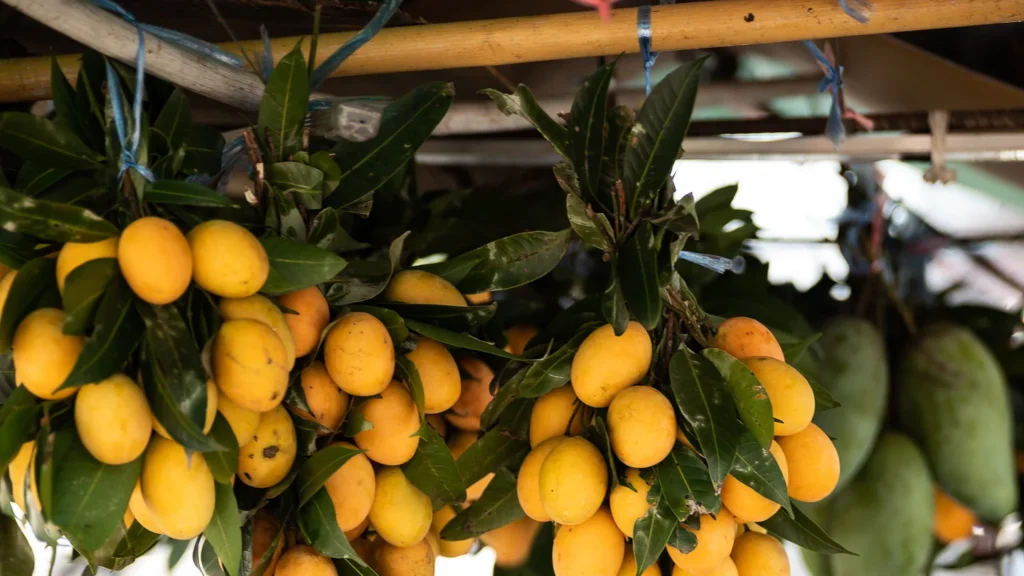
Chanthaburi is a useful place to explore Thai food through a few local dishes, fresh fruit and markets rather than a fixed restaurant list. Start with moo chamuang and Sen Chan noodles, leave room for regional sweets, and ask sellers what is ready to eat or suitable to take with you.
Pick one or two dishes to seek out, give yourself time to browse a market, and ask how ripe the fruit is before buying it. You will still have room for whatever looks good on the day, without building the trip around one stall or an old timetable.
Moo chamuang is one of the dishes most closely associated with Chanthaburi. It combines pork, chamuang leaves and spices. The leaves bring a sour note, giving the dish a character that differs from a standard pork curry.
If you see moo chamuang on a menu, it is a good choice when you want to try a dish with a clear local identity. Ask how it is prepared that day if you have dietary needs, as recipes and accompaniments can differ.
Look for Sen Chan, the local rice noodle associated with the province. Tourism Authority of Thailand descriptions note a stir-fried version with a red, spicy sauce. Noodle dishes can be an easy starting point for travellers who want something recognisably local but uncomplicated to order.
The useful phrase is the dish name itself: “Sen Chan.” If you are unsure about heat, ask before ordering rather than assuming a sauce will be mild. Seafood, pork and other additions vary by vendor and preparation.
At a market, you may also come across khao khluk phrik kluea, rice seasoned in the local phrik kluea style and served with seafood ingredients. It reflects a broader part of Chanthaburi eating: seafood and market cooking appear alongside noodle dishes, pork dishes and snacks.
Tell the seller about allergies or dietary restrictions before ordering. Seafood, fish sauce, shrimp paste, egg, peanuts or pork may be involved, even when they are not obvious from the dish name.
Fruit is part of Chanthaburi’s food identity, and it also appears in savoury cooking. Tourism Authority of Thailand material records dishes that use fruit such as durian and mangosteen, while Chanthaburi’s agricultural sources identify durian, mangosteen and rambutan among local processed products.
For eating fruit on its own, avoid treating any variety as guaranteed. Supply, ripeness and selection can change. A better way to buy is to ask three questions:
Those questions are more useful than choosing by appearance alone. They also help you avoid buying more than you can enjoy while it is at its best.
Talad Nam Pu is a downtown Chanthaburi market that Tourism Authority of Thailand describes as carrying fresh and dried goods, vegetables and groceries, with local prepared food later in the day. It can be a practical place to see how ingredients, snacks and ready-to-eat dishes sit alongside one another.
Do not rely on an old article for a current schedule. Before making a dedicated visit, confirm the market’s opening arrangements, the vendors you hope to find and any holiday changes directly. Once there, give yourself time to walk the whole area before deciding what to buy.
A few small habits make a market visit easier:
For a food stop beyond the town-centre market, Ban Nong Bua’s Khanom Plaek Community is known for traditional snacks with unusual names. Two examples are khanom khuay ling, a boiled black-glutinous-rice-flour sweet coated with fresh coconut, and khanom tid kho, a related sweet served with ground peanuts and cane sugar.
The names are part of the local story, but it is the ingredients that matter most for planning. Coconut, glutinous flour and peanuts are common in these examples, so ask about ingredients if you have an allergy or are choosing a snack for someone else.
A food-focused visit does not need a long checklist. Choose a local pork dish or noodles for one meal, browse a market for snacks and ingredients, then make your fruit purchase once you know what you can eat or carry. This leaves space for a dish that catches your attention without turning the day into a restaurant ranking exercise.
For a wider plan that leaves time for food, Old Town and nature, use our two-day Chanthaburi weekend guide. When choosing where to stay between food stops, explore Blu Monkey Hub & Hotel Chanthaburi and review the hotel facilities as you shape your trip.
Up to 5% discount on room rate
(at least 3 days in advance, only on the stay period of 1 May - 31 October)
10% discount on Food and Beverage at the Property
10% discount on Shop Product at the Property
By continuing to use this website you agree to the use of cookies according to our Privacy Policy.